The Disappearing Act: Hidden-Headlight Cars That Still Make Us Look Twice
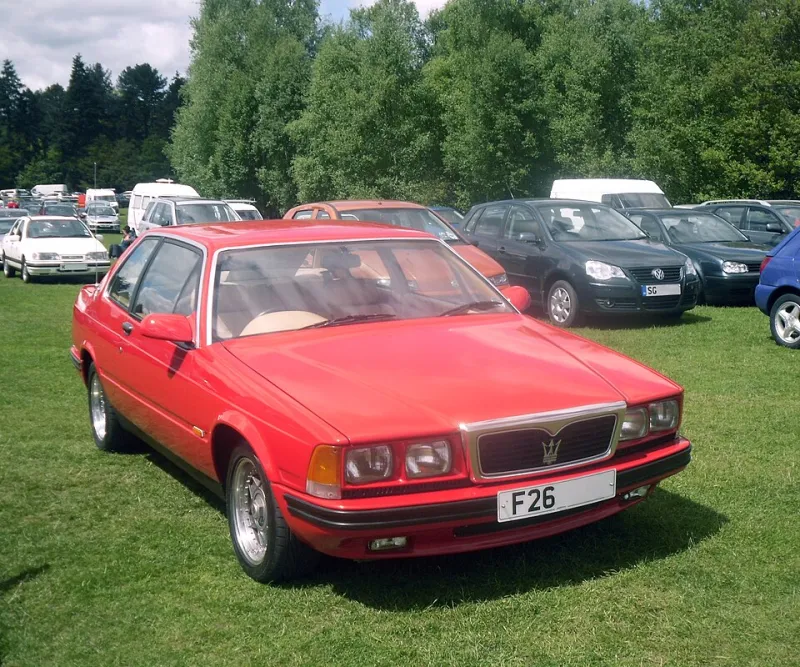
Photo: mancbranchcropping, color adjusting and plates hidden by Cloverleaf II, CC BY 2.0, via Wikimedia Commons
Some cars wear their lighting like jewelry. Others make it vanish. That little mechanical magic trick—the flip, the rotate, the slide—turns an ordinary driveway moment into theater. At AllCarPictures, we have always had a soft spot for cars that hide their eyes, so this photo tribute is part history lesson, part spec sheet, and part wallpaper shopping spree.
Why We Love a Car That Plays Peekaboo
Hidden headlights were never just about aerodynamics, though that was the excuse. They were about drama. A 1960s designer could make the front of a car look like a clean slab of fiberglass or a full-width grille, then reveal two bright eyes only when the sun went down. It felt like science fiction for the driveway set—and in many ways, it was.
The systems varied. Some cars used vacuum canisters and hoses. Others relied on electric motors, cables, or a combination that worked perfectly until it did not. The result was the same: a front end that looked like it belonged to a spaceship, a shark, or a very serious piece of Detroit iron. Enthusiasts still trade stories about vacuum leaks, stuck doors, and the distinctive sound of a lazy motor waking up after a long winter.
The Greatest Hits: Icons That Made the Trick Famous
1963-67 Chevrolet Corvette Sting Ray
The C2 Corvette is the poster child for pop-up headlights in America. The split-window 1963 coupe gets the glory, but every Sting Ray from 1963 through 1967 flipped its lamps up from the nose. Under the hood, buyers could get a 327 cubic-inch V8 with roughly 250 to 375 horsepower, depending on carburetion and tuning. The fiberglass body kept weight down, and the hidden lights kept the front end clean enough to make other sports cars jealous.
1966-67 Dodge Charger
Few cars used concealment as boldly as the first-generation Charger. The full-width grille hid the headlights behind doors, and the fastback roofline made the whole car look like it was already moving at 100 mph. Power ranged from a mild 318 V8 to the mighty 426 Hemi. The Charger was big, bold, and unapologetically American—a perfect candidate for a high-resolution gallery shot from a low angle.
1967-68 Mercury Cougar
The Cougar brought hidden headlights to the pony-car crowd with a vacuum-operated system and a sequential taillight show out back. It was luxurious in a way the Mustang was not, and the covered lamps gave it a more expensive face. Engine choices included 289 and 390 V8s, with the GT package adding extra attitude. Today, a clean Cougar in the right light looks like a baby Thunderbird with a secret.
1968-69 Pontiac GTO
Pontiac made the hideaway headlights optional on the GTO, which means some cars have the clean Endura bumper look and some do not. When the doors are shut, the GTO front end is one of the smoothest shapes of the muscle-car era. The 400 cubic-inch V8 was the standard heartbeat, with Ram Air versions making more noise and more friends at stoplights. It is a great reminder that hidden headlights were not just for exotics—they showed up on America's favorite street brawler.
1968-82 Chevrolet Corvette C3
The shark-era Corvette kept the pop-up tradition alive for an entire generation. From the chrome-bumper 1968 models to the rubber-bumper 1982 cars, the lamps flipped up from the hood. Engines ranged from small-block 350s to the 454 big-block, and the 1970 LT-1 made 370 horsepower. The C3 is arguably the most recognizable hidden-headlight car in the country—and one of the most fun to photograph with the lights halfway up.
1984-96 Chevrolet Corvette C4
The fourth-generation Corvette modernized the trick with a cleaner wedge shape and electric pop-up lamps. The base 5.7-liter V8 made 205 horsepower at launch and climbed over the years, while the 1990 ZR-1 brought a 375-horsepower LT5 under the hood. The C4 is a bargain enthusiast car today, and its headlight doors still feel like a event every time they rise.
1971-73 Buick Riviera
The boattail Riviera is a design landmark, and its hidden headlights are part of the reason. The long hood and pointed tail get the attention, but the concealed lamps keep the front end looking like a single continuous surface. A 455 cubic-inch V8 provided plenty of torque for a car that weighed about two tons. It is the kind of oddball detail that makes a photo gallery worth a second pass.
1993-2002 Pontiac Firebird
The fourth-generation Firebird was the last mainstream American car to make pop-up headlights part of its identity. The sleek nose looked low and fast with the lamps down, and the Trans Am's LT1 and later LS1 V8s gave it real performance. The 2002 WS6 made 325 horsepower and remains a favorite for late-night cruise photos. When the Firebird finally went away, an era went with it.
Our Five Most Theatrical Disappearing Acts
- 1966-67 Dodge Charger — the full-width grille reveal is still unmatched.
- 1963-67 Corvette Sting Ray — pure space-age theater in a small package.
- 1967-68 Mercury Cougar — vacuum-powered luxury with a pony-car heart.
- 1971-73 Buick Riviera — the boattail shape makes the hidden lamps feel extra sneaky.
- 1993-2002 Pontiac Firebird — the last of the breed, and a bargain for collectors.
Why They Vanished
Hidden headlights faded for practical reasons, not because enthusiasts stopped loving them. The mechanisms added cost, weight, and complexity. Vacuum lines cracked. Electric motors burned out. A minor parking-lot bump could turn into an expensive repair because the lamp doors and their linkages were delicate. By the 1980s and 1990s, aerodynamic composite headlamps let designers create smooth front ends without moving parts. Federal lighting rules also evolved, and automakers no longer needed the trick to get the look they wanted.
There is also the simple matter of warranty claims. A conventional headlight is a bulb and a housing. A hidden headlight is a system—and systems break. That is part of why survivors are so charming today. Every working set feels like a small victory over gravity, corrosion, and time.
Wallpaper Picks and Gallery Notes
For the AllCarPictures gallery, we like shots that show the transition: lamps down, lamps half-raised, lamps up. That sequence tells the story better than any spec sheet. Look for clean, uncluttered backgrounds—a plain concrete wall, an empty parking garage, or a quiet two-lane road at dusk. Low angles make the front ends look wider and more dramatic, especially on the Charger and Riviera.
If you are hunting for a desktop wallpaper, the C3 Corvette and fourth-gen Firebird are tough to beat. Both have unmistakable silhouettes, and both look great in high resolution. The Cougar and GTO are better for detail shots—grille texture, chrome trim, and the little seams where the lamp doors meet the bodywork.
As of 2026, hidden-headlight cars are old enough to be classics and weird enough to be interesting. They are not the fastest cars at the show, and they are not always the easiest to own. But they have a party trick that never gets old. Browse the gallery, pick a favorite, and download a wallpaper that reminds you why a car with no visible headlights is still worth a second look.