The Small-Car Rebellion: America's 1960s and '70s Compacts Were Never Just Economy Specials
There's a temptation to remember the 1960s and '70s as one long parade of big-block muscle cars, land yachts, and chrome-heavy cruisers. But walk through any honest car show or scroll through a well-curated photo archive, and the little guys start stealing the show. America's compact cars were practical, yes, but they were also clever, quirky, and occasionally downright brave. They kept families moving, gave budget-minded buyers something to brag about, and proved that size wasn't the only way to make a statement.
That's the spirit behind this AllCarPictures gallery tribute: small cars with big character. These aren't just economy specials. They're rolling snapshots of how Detroit learned to think smaller without thinking boring.
Why These Little Cars Still Belong in the Spotlight
By the late 1950s, the Big Three had spent years selling the idea that more was better. Longer, lower, wider—you know the drill. Then the imports started nibbling at the bottom of the market, and American manufacturers realized they needed an answer. The result was a wave of compacts that were designed to be affordable and thrifty, but many of them ended up with personalities all their own.
The best of them still look sharp in high-resolution photos. Their proportions are honest, their details are distinct, and their stories are more interesting than a lot of the oversized iron that gets the glory. Whether you're hunting for a desktop wallpaper or comparing specs for a weekend dream garage, these cars deserve a closer look.
Chevrolet Corvair: The Compact That Broke the Rules
The Corvair is the obvious place to start because it refused to follow the script. While most American compacts went the conventional front-engine, rear-drive route, Chevrolet went rear-engine and air-cooled. That flat-six out back gave the Corvair a low, clean nose and handling characteristics that felt more European than Detroit.
Early models made around 80 horsepower from an 80-hp air-cooled flat-six, but later versions—especially the turbocharged Spyder and the sporty Corsa—pushed toward 140 to 180 horsepower. The Corvair was roughly 180 inches long, which made it genuinely compact by the standards of the day. It also looked like nothing else in a Chevy showroom. In photos, the early coupes have a crisp, almost Jet Age purity, while the later Corsa models add a dose of attitude.
The Corvair's story got complicated thanks to Ralph Nader's Unsafe at Any Speed, but the car itself remains a fascinating piece of American engineering. It was a small car that asked big questions, and that's exactly why it still draws a crowd at any gathering.
Ford Falcon: The Sensible One That Started a Stampede
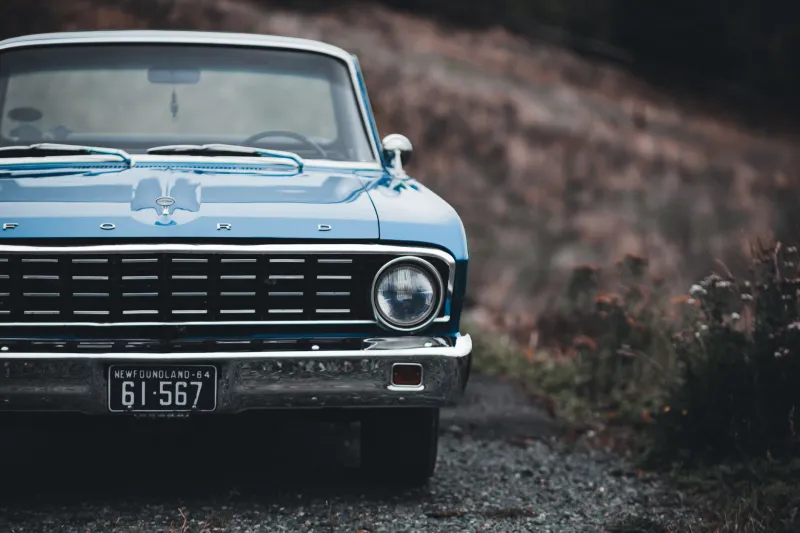
Ifthe Corvair was the rule-breaker, the Falcon was the sensible sibling who showed up early and did the homework. Introduced for 1960, the Falcon was simple, light, and cheap to build. It wasn't trying to be a sports car. It was trying to be a car America could afford—and it worked.
Early Falcons used a 144-cubic-inch inline-six making about 90 horsepower, with later 170- and 200-cubic-inch sixes adding more muscle. At roughly 170 inches long, the first-generation Falcon was genuinely tidy. It also spawned a whole family, including the handsome Futura and the Ranchero pickup, which is basically a compact car with a cargo bed and a cowboy hat.
In the gallery, the Falcon's clean lines and restrained chrome make it a great subject. It doesn't shout. It just looks right. That's a quality that has aged remarkably well.
Plymouth Valiant: Mopar's Slant-Six Survivor
The Valiant deserves more credit than it usually gets. It arrived with the famous slant-six engine, a design that was tough, torquey, and easy to work on. The 170-cubic-inch version made around 101 horsepower, and the later 225-cubic-inch version became one of the most respected six-cylinders in American history.
Styling was never boring. Early Valiants had a distinctive front end and a compact stance that looked almost eager. Later Duster and Scamp variants added a dose of swingin' '70s flair. The Valiant was about 184 inches long in its first generation, so it wasn't a microcar, but it was far more manageable than the full-size monsters of the era.
For photographers, the Valiant is a gift. Its grille treatments, badge placement, and two-tone paint options give you plenty to frame. And for anyone who has ever owned one, the slant-six's reputation for refusing to die is its own kind of legend.
The Second Wave: Maverick, Nova, Dart, and Gremlin
The compact story didn't stop with the first wave. Ford's Maverick arrived for 1970 as a simple, budget-friendly coupe with clean lines and a surprisingly sleek roofline. The Chevrolet Nova started as a rear-engine oddity before becoming a conventional compact—and then became a muscle car favorite. The Dodge Dart and Plymouth Duster carried the Mopar compact torch with sturdy A-body platforms and plenty of engine choices. And then there was the AMC Gremlin, a car that looked like a hatchback that had been left in the sun too long but somehow became lovable anyway.
These cars matter because they kept the compact segment alive through oil crises, changing regulations, and shifting tastes. They also created some of the most interesting visual moments in American car design. The Maverick's long hood and short deck, the Nova's clean flanks, the Duster's fastback roofline—each one is worth a wallpaper.
What to Look for in the Gallery
When you browse high-resolution images of these compacts, pay attention to the details. Look at the wheelbase, the overhangs, and the way the greenhouse sits on the body. Small cars often have more interesting proportions than big ones because designers had less room to hide awkward shapes. Check out the badge work, the hubcaps, and the paint colors—especially the earth tones and brights of the '70s.
Specs tell part of the story, too. A 90-horsepower Falcon and a 180-horsepower Corvair Corsa are completely different experiences, even if both are classified as compacts. That range is what makes this corner of car culture so much fun.
Final Frame
America's forgotten compacts aren't forgotten because they were bad. They're overlooked because the spotlight usually goes to the flashiest cars. But these little machines had character to spare, and they helped shape the modern American automotive landscape in ways that are still visible today. So the next time you're scrolling through a gallery of high-resolution car photos, give the small cars a second look. They earned it.