The Long Cushion: A Photo Tribute to America's Bench-Seat Era
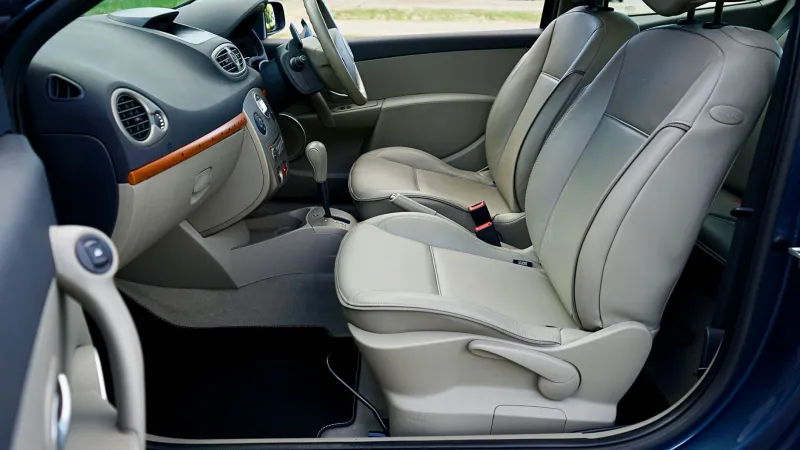
Bench seats don't get hero shots. They get elbows, grocery bags, dog hair, and a thousand miles of highway diner crumbs. That's exactly why they deserve a gallery. The front bench was the most democratic piece of hardware in the American car: one long cushion, no armrest diplomacy, no center console to hide behind. You sat where you sat, and everybody knew it.
A Cushion With a Job Description
In the postwar decades, the bench seat was standard equipment because it was cheap, roomy, and honest. A sedan could carry three across the front without anyone consulting a spec sheet. Taxis, police cruisers, wagons, and base-model coupes all made the same promise: plenty of shoulder room and a steering column that doubled as a gear selector. The famous "three on the tree" setup—three-speed manual on the column—only made sense with a bench, because the middle passenger needed footwell space and the shifter needed to be out of the way.
Photo galleries from the era show the bench in context. You see wide door panels, simple dashboards, and upholstery patterns that ran the length of the car like a living-room sofa. Brochures sold the idea with families piled in at a drive-in or couples sliding across the vinyl at a lookout. The ad copy was corny, but the hardware was real: a bench seat turned a car into a rolling front porch.
The Geometry of Togetherness
The bench seat shaped behavior. Kids fought over the middle. Dates happened in inches. A parent could reach a screaming toddler without unbuckling, for better and worse. Taxi drivers learned to read a passenger's mood from how close they sat to the door. In small towns, a bench-seat cruiser was a social tool: you could pile four friends in a coupe and nobody had to call shotgun in the modern sense.
That social geometry is hard to capture in a single exterior shot. The best bench-seat galleries get inside the car: the worn spot at the driver's hip, the seam split on the passenger side, the rubber floor mat, the lap belt folded into the cushion. Those details tell you how the car was used. A bucket-seat interior can look unused. A bench seat always looks lived in.
Column Shift, Clear Dashboard, No Center Console
There's a reason bench-seat interiors photograph so well from the passenger door. The dashboard is uncluttered. The steering wheel is thin. The gear lever is a chrome stalk with a simple pattern, and the parking brake is a pedal you stomp. Without a center console, the front footwell becomes a shared space—big enough for a purse, a thermos, or a bag of road-trip snacks.
Specs matter here, even in a photo feature. Bench-seat cars often had wider front tracks and simpler interiors, and the split-bench became a compromise for buyers who wanted a little separation without giving up the third seat. Wagons and full-size sedans kept the long cushion well into the 1970s. Trucks held on even longer. The bench wasn't sporty, but it was efficient in a way modern interiors forget: one part, three passengers, no plastic divider.
What the Bucket Seat Sold Us
Bucket seats and center consoles didn't steal the bench by accident. They offered lateral support, a place for cupholders, and a cockpit feel that matched the market's turn toward personal luxury and sporty trim. They also made cars safer in some ways—better belt geometry, less sliding in a crash, and a clear boundary between driver and passenger.
But something got lost. The center console became a wall. The front seat turned into two addresses instead of one room. Modern interiors are quieter, safer, and far more adjustable, yet they rarely feel as generous. A bench seat said the car was a shared space first and a driver's tool second. That's a philosophical difference you can see in a photo: the empty middle seat in a sedan looks like wasted space now. In 1970, it looked like company.
How to Read a Bench-Seat Gallery
Start with the upholstery. Vinyl, cloth, and patterned fabric tell you the trim level and the era. Then look at the door panels and dash: if they're simple, the bench was likely standard. Check the steering column for a shifter or a blanked-off plate. Look at the rear door openings in wagons and sedans—bench-seat cars often carried their roominess front to back. And don't skip the period advertisements. They're not just nostalgia; they're proof of how the industry sold togetherness before it sold individual space.
High-resolution interior shots are the real prize. A clean survivor with original pleats and a crack-free dash is a document. A worn driver's cushion is even better. It shows where America actually sat.
Survivors and the Long Cushion
In 2026, a clean bench-seat sedan at a cruise night draws a crowd for the same reason a diner booth does: it feels like home. The long cushion is inefficient by modern standards, and that's the point. It asks passengers to share space, to negotiate the armrest that isn't there, to ride together instead of side by side in separate buckets. The bench seat may be a relic, but it's a relic with a pulse. Our photo tribute is a reminder that the simplest interior idea in American cars was also the most human.