Chrome Mascots: The Hood Ornaments That Once Made Every Drive a Parade
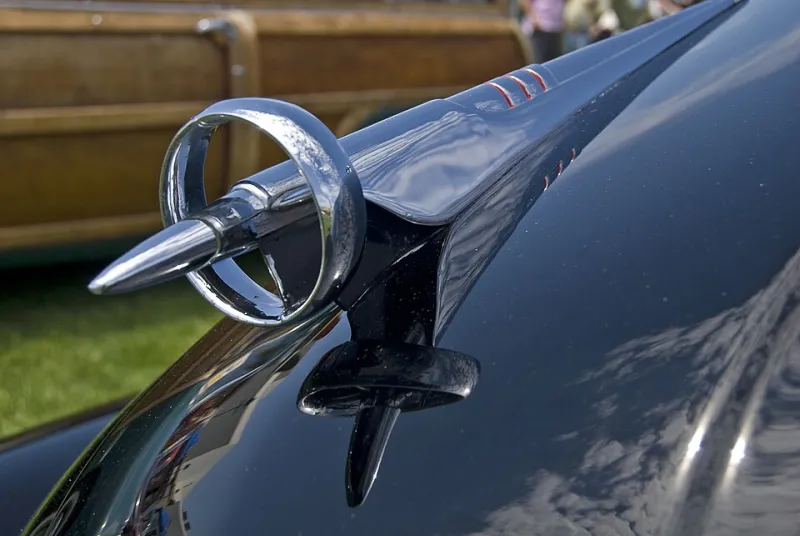
Photo: Damian Gadal, CC BY 2.0, via Wikimedia Commons
There was a time when a car did not just announce itself with a grille, a color, or a exhaust note. It introduced itself with a little piece of sculpture perched right up front, catching the sun and leading the way down the road. We are talking about the hood ornament, of course. At AllCarPictures, we love the big shapes and the famous nameplates as much as anyone, but the hood ornament sits in its own lane. It is part jewelry, part mascot, part advertising, and part pure American showmanship.
Our latest high-resolution gallery gathers some of the great chrome characters of the 1920s through the 1960s, along with close-up detail shots that are ready to become your next wallpaper. Think of it as a tour through the shiniest little art gallery ever mounted on four wheels.
When the Hood Became a Pedestal
In the early days of the automobile, the radiator cap was a practical thing. It had to be there, and it had to be reached. Builders quickly figured out that if people were going to look at the front of the car anyway, they might as well give them something worth looking at. Early motometers and temperature gauges were sometimes dressed up with figures, and before long the ornament became a styling statement all its own.
The 1920s and 1930s were the golden age. Chrome was coming into its own, streamlining was the new religion, and every manufacturer wanted a recognizable hood mascot. Some were elegant. Some were literal. Some looked like they had escaped from a department-store display case and gone into the family business. Cadillac had its Goddess, Pontiac had its Chief, Dodge had its ram, and Mack trucks had that unmistakable bulldog. The hood ornament was no longer an afterthought. It was the brand in three dimensions.
This was also when the hood ornament became a small status symbol. A plain cap said one thing. A sculpted flying figure with chrome wings said something else entirely. In an era before every car had a badge the size of a dinner plate, that little ornament did a lot of talking.
Animals, Arrows, and a Little Bit of Theater
What makes hood ornaments so much fun to photograph is how wildly different they can be. You get sleek speed lines, stylized birds, leaping animals, human figures, and abstract shapes that look like they belong on a 1930s office building. Some are dignified. Some are goofy. A few are so over the top that you cannot help but smile.
Pontiac's Indian head is a favorite for obvious reasons. It is bold, recognizable, and deeply tied to the brand's identity. Dodge's ram is another one that stuck around long enough to become a visual shorthand for the whole company. Then there are the one-off mascots and aftermarket pieces that owners added on their own, because nothing says personalization like bolting a tiny chrome eagle to your family sedan.
The best of them share a few traits. They read clearly from a distance. They look good in silhouette. And they have enough detail to reward a closer look. That is why the gallery includes both full-car shots and tight crops. The full view shows how the ornament sits in the design. The close-up shows the tooling, the reflections, and the wear that only comes with age.
The Safety Conversation and the Slow Fade
By the late 1960s, the mood around the front of the car was changing. Safety regulators and engineers were taking a harder look at what happened when a pedestrian met a pointy chrome object. Hood ornaments were not the only target, but they were an easy one. The same styling feature that made a car look premium could also look like a problem in a crash test report.
So the ornaments began to shrink, flatten, or disappear altogether. Some turned into spring-loaded pieces that could fold back. Others became simple badges or barely raised emblems. By the 1970s, the big stand-up mascot was mostly a memory on new cars, though it never fully went away. Mercedes kept its star. Rolls-Royce kept its flying lady. And the aftermarket kept the dream alive for anyone who wanted a little extra sparkle on the hood.
That fade is part of the story, but it is not a sad ending. It just means the surviving ornaments feel more special now. They are reminders of a time when car design was less worried about a wind-tunnel number and more interested in making a statement you could see from across the parking lot.
What to Look For in the Gallery
When you flip through these photos, pay attention to the small stuff. Look at how the chrome catches the light. Look at the pitting and the patina. A perfect reproduction is fine, but an original piece with a few miles on it has a story. Check the base, too. The way an ornament meets the hood can tell you a lot about how it was mounted and how the car was cared for.
The wallpaper-ready detail shots are meant to be lingered over. Some show the full sculpture against a clean sky. Others zoom in on a wing, a wheel, or a face until the ornament starts to look like a piece of abstract art. That is the fun of this corner of the hobby. You do not need a museum ticket. You just need a good camera and a car show with a few old-timers in the lot.
Why They Still Matter
Hood ornaments are not just nostalgia. They are a reminder that cars used to be designed with a sense of play. A modern grille can be aggressive or sleek, but it rarely has the charm of a little chrome animal leading the charge. That is why these pieces still draw a crowd at shows and why collectors keep hunting for them at swap meets.
So take a look at the gallery. Pick a favorite. Maybe it is the Goddess, maybe it is the ram, maybe it is some strange little mascot you have never seen before. Then imagine it on the hood of a big American sedan, heading down a two-lane road with the sun bouncing off the chrome. That is the feeling we are chasing here at AllCarPictures, one shiny detail at a time.